ICFPro.ca is a division of ICFhome Ontario - Direct Line 1 705 533-1633 - Email: info@icfpro.ca

ICF Shell Contractor Ontario: The Structure Done Right

Ontario • ICF Shell Scopes • Foundations • Walls • Structural Accuracy
ICF Shell Contractor Ontario: The Structure Done Right Before the Finish Trades Ever Show Up
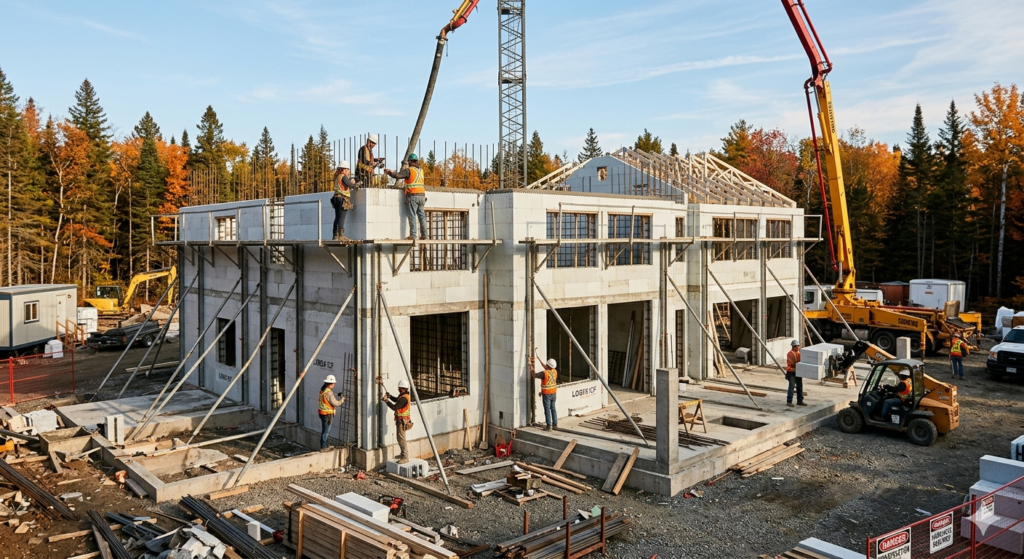
Some clients want a full custom build. Some do not. Some already have their own builder, own finishing crew, or own project path, and what they need from us is the part that has to be right before anything else can go right: the ICF shell.
That shell is not just a stack of blocks and a concrete pump day. It is the foundation, the wall alignment, the openings, the elevations, the embed locations, the concrete placement, and the kind of accuracy that affects every trade that comes after. If the shell is square, straight, level, and properly planned, the rest of the job goes smoother. If it is sloppy, every mistake gets passed downstream and multiplied by time, labour, and frustration.
🧱 Foundation-only and shell-only scopes
📐 Accurate walls, openings, elevations, and layout
🚚 Supply + install or install-only coordination
🏗️ Built for owners, builders, and hybrid projects
Shell work is where the project either gains momentum or starts bleeding money.
If the shell scope is what you need, this page is for you. Some clients come to us for ICF installation and supply. Some need a more foundation-focused scope through ICF foundation contractor Ontario. Others want experienced brand-specific crews such as a Nudura installer Ontario. The common thread is simple: the shell has to be built properly before anyone starts pretending finishes will hide structural laziness.
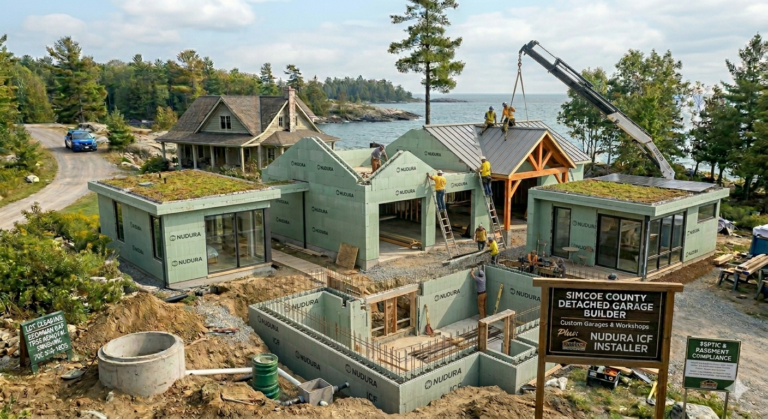
In Ontario, shell-only ICF work makes sense for a lot of project types. Some homeowners are acting as owner-builders and want professional ICF crews for the structural portion while handling other parts themselves. Some general contractors want to subcontract the ICF portion to people who actually do it all the time. Some builds are detached garages, shops, pools, retaining structures, or shells that will be taken over by another team once the structure is complete.
That is exactly where a clear shell scope matters. Everyone needs to know what is included, what is not, where the handoff happens, and how accurate the finished shell needs to be for the next phase to proceed properly. A good shell contract is not vague. It is disciplined.
Builder truth
Every finish trade loves a precise shell and pays for a sloppy one.
If the walls are off, openings are wrong, elevations drift, or embed details get missed, that pain does not disappear. It gets transferred to framers, roofers, window installers, mechanical trades, and the project budget.
What an ICF Shell Contractor Actually Does
It is more than stacking blocks and waiting for concrete
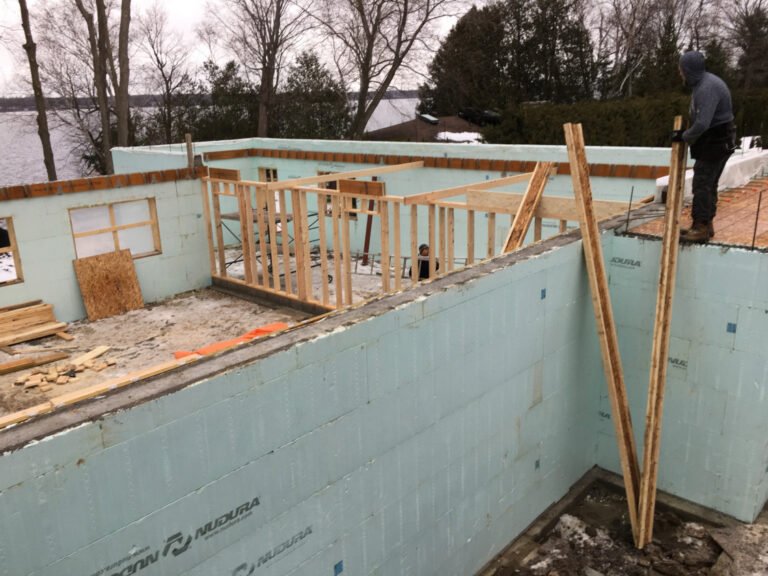
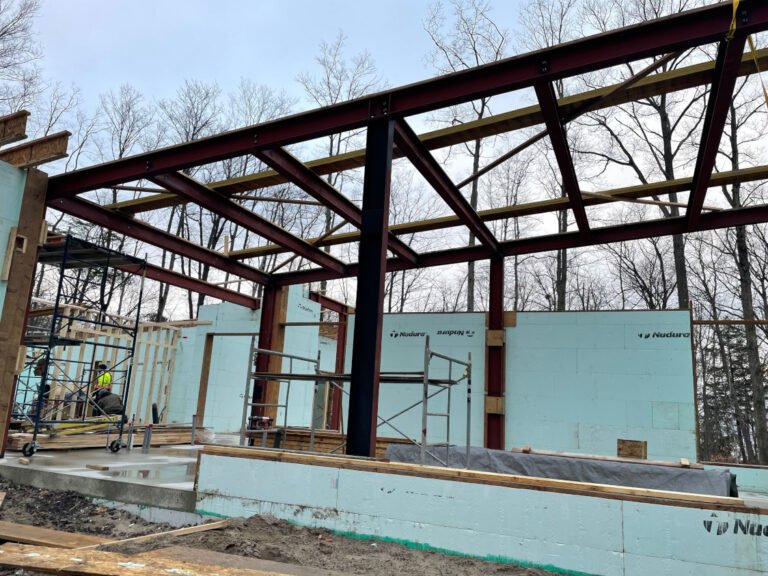
When clients say they want an ICF shell, they usually mean they want the structural ICF portion supplied, laid out, braced, poured, and brought to a clean handoff point. That may include footing coordination, foundation walls, above-grade ICF walls, beam pockets, bucks, openings, ledgers or embed details, and whatever other shell-specific work is defined in the scope.
The exact shell package depends on the job. On some projects, we are doing a basement foundation only. On others, we are building the full ICF wall shell right up to the point where floor systems and roof structure take over. On other jobs, the shell may involve specialty work tied to ICF foundations, pools, and other structures or a detached building such as an ICF garage builder Ontario scope.
The key point is this: shell work is structural work. It affects everything that follows. It is not where you want guesswork, inexperience, or a crew learning on your project.
Simple rule: the cleaner the shell handoff, the fewer surprises the rest of the build will create.
Why Shell Accuracy Matters So Much
Because structure is the reference point for almost every trade that follows
ICF shell accuracy matters in ways clients do not always see until something goes wrong. Wall alignment affects floor system bearing. Opening accuracy affects window and door installation. Elevation errors affect roof geometry, stair relationships, cladding lines, and finish transitions. Out-of-square walls show up in framing. Poorly planned service penetrations become field fixes later. Even a small miss can become a chain reaction.
A homeowner we worked with had seen another project where “close enough” was apparently an official measuring system. By the time the next trades arrived, everyone was modifying something. Openings needed help. Connections needed correction. Layout confidence was gone. That is what a bad shell does. It burns time from people who were never supposed to spend their day solving somebody else’s concrete problems.
A good shell contractor protects the next stages of the project by building straight, checking dimensions, respecting elevations, and understanding how the structure will receive the work that comes after.
| Shell detail | Why it matters | What happens when it is wrong |
|---|---|---|
| Wall alignment | Controls bearing, framing setup, visual straightness | Framers start correcting instead of building |
| Openings | Controls windows, doors, lintels, and finish fit | Expensive field adjustments and delays |
| Elevations | Sets floor, roof, stairs, and exterior relationships | Cascading corrections across the build |
| Embed / connection planning | Supports later structural and service coordination | Retrofits, drilling, patching, and compromise |
Foundations, Full Wall Shells, and Shell-Only Contracts
Not every client needs the same handoff point
Some clients want only the foundation done. Others want the entire ICF shell brought up to the level where the floor system, roof framing, and later trades can take over. That is why shell scopes need to be described carefully instead of casually using phrases like “do the ICF part.”
A shell-only contract might include layout review, block supply, bracing, pumping coordination, concrete placement, wall consolidation, stripping temporary components, and delivery of a completed shell ready for the next stage. It may also define exclusions very clearly, such as excavation, backfill, framing, waterproofing details beyond the shell scope, mechanical rough-ins, or other trade work.
On more complete custom builds, the shell is only one phase of the process and flows into broader work such as custom ICF home construction. But many Ontario clients do not need the full package. They need the shell done right so their own path can continue cleanly from there.
Good scoping
The best shell contracts make the handoff point crystal clear.
Who handles excavation? Who handles backfill? Who is responsible for waterproofing, floor systems, framing connections, and later penetrations? Clarity here prevents arguments later.
Supply and Install vs. Install-Only
Both can work, but the responsibilities need to be defined properly
Many shell clients prefer one source for both material and installation because it simplifies coordination and reduces finger-pointing if something is missing, damaged, or poorly timed. That is where a true supply and install package often makes the most sense.
In some cases, a client or builder may already have material sourced and only need experienced crews for installation. That can work too, but only when the design, quantities, delivery timing, and brand-specific details are understood properly. Not all ICF systems behave exactly the same in the field, and not every plan has been checked as carefully as the person ordering material may believe.
If a client is still sorting through product choices, it can help to review the best ICF brands in Ontario. The right system is not just about a brochure. It is about availability, crew familiarity, engineering compatibility, and how smoothly that product fits the actual project.
Shell Work Starts Before the First Block Gets Stacked
Because site prep and layout still decide how smooth the shell phase will be
ICF shell work does not begin when the first course goes down. It begins with excavation accuracy, subgrade preparation, footing readiness, access, staging, and how well the site supports the work. Good shell crews still need a good starting platform. If excavation is rough, elevations are off, or site access is poor, the shell phase gets harder, slower, and more vulnerable to mistakes.
That is why site conditions matter more than clients sometimes expect. On projects where excavation and readiness are part of the challenge, it helps to think through the ground-work realities first, which is where something like excavation services Georgian Bay becomes relevant to the conversation.
A good shell contractor can solve a lot. But a shell contractor should not have to spend half the job correcting a site that was not prepared properly for structural work to begin.
Builder reality: straight walls begin with good layout and good ground, not with heroic excuses after the pour.
The Shell Has to Respect the Building That Comes After It
Structure should support the next trades, not surprise them
Even when our scope stops at the shell, the shell still has to be built with the later stages in mind. Mechanical runs, floor systems, stair relationships, ventilation routing, beam pockets, service penetrations, and framing connections do not magically appear later without consequence. A smart shell contractor understands how the building will continue after the ICF phase is done.
That is one reason it can be useful for clients to think ahead about later design coordination such as mechanical drawings Ontario and HRV / ERV design Ontario. The shell itself is structural, but it still needs to accommodate the logic of the building systems that follow.
This does not mean the shell contractor is taking over all later design disciplines. It means a good shell contractor understands that ignorance at the structural stage has a way of becoming somebody else’s expensive problem later.
Cost Matters, But Cheap Shell Work Is Usually Expensive Work Wearing a Fake Mustache
Clients should compare scope, accuracy, and risk, not just line-item price
Clients often ask what the shell will cost per square foot or whether a certain price sounds right. Those are fair questions, but shell pricing only becomes useful when the scope is actually defined. A number without scope is just optimism with a calculator.
If you are trying to understand foundation pricing more broadly, it helps to review ICF foundation cost. But shell pricing should also reflect the complexity of the plan, number of openings, wall heights, site access, pump conditions, reinforcement requirements, brand choice, and where the responsibility stops.
Cheap shell work is dangerous because its failures do not stay in the shell line item. They get paid for by other trades, schedule delays, corrections, and confidence loss. A shell is the wrong place to save money by lowering standards.
Ontario Clients Need a Shell Contractor Who Builds to the Drawings, Not to Wishful Thinking
Current code, current plans, clear scope, disciplined execution
Shell work has to line up with the permitted design, structural intent, and the code path the project is actually following. That is why official references such as the 2024 Ontario Building Code and broader industry awareness like Ontario Building Code changes for 2025 matter at the planning stage.
The point is not to drown clients in code language. The point is to make sure the shell is executed in a way that respects the actual approved design and does not create downstream permit or inspection trouble because somebody decided field improvisation was faster than discipline.
In shell work, professionalism often looks boring from a distance. That is a compliment. Straight lines, correct openings, clean pours, proper bracing, clear scope, and no drama is exactly what most clients should want.
Why Clients Choose Us for ICF Shell Work in Ontario
Because structure is the wrong place for experimentation
We know the difference between an ICF job that looks fine for a photo and an ICF shell that is actually ready for the next stage of construction. Clients come to us when they want a crew that understands foundations, walls, alignment, openings, bracing, pour control, and the importance of handing off a clean structural result to the next team.
Some clients need a foundation-only package. Some need a garage shell. Some need a broader structure done before their own builder takes over. Some are still deciding between full-build and shell-only service. The common thread is simple: they want the structural part done properly.
A well-executed shell saves time, protects later trades, and gives the rest of the project a better start. That is the value.
ICF Shell Contractor FAQ
What does “ICF shell only” usually mean? +
It usually means the structural ICF portion of the project is being supplied and installed to a defined handoff point, without the contractor necessarily taking on the entire custom home or full finishing scope. The exact handoff point should always be written clearly into the contract.
Can you do just the foundation and not the full house shell? +
Yes, many projects are foundation-only. Others include above-grade ICF walls as part of a larger shell scope. The right package depends on the project, the drawings, and who is taking over the next stages.
Why is shell accuracy such a big deal? +
Because almost every trade that follows uses the shell as its reference. If the structure is off, the errors ripple into framing, windows, roofing, cladding, and finishes. A sloppy shell costs money long after the ICF crew is gone.
Do you supply the ICF blocks as well, or install only? +
That depends on the scope. Many clients prefer full supply and install for cleaner coordination, but install-only arrangements can also work when the material, design, timing, and responsibilities are clearly defined.
Can I hire you if I already have my own builder for the rest of the project? +
Yes. That is one of the main reasons shell-only scopes exist. Some clients want specialized ICF crews for the structural phase and then transition to their own builder or other trades once the shell is complete.
Is the cheapest shell quote usually the best value? +
Not necessarily. Shell pricing only means something when the scope, accuracy standards, and exclusions are clear. A cheap quote can become a very expensive choice if it creates corrections, delays, or handoff problems for the next trades.
Get the Structure Right First
If you need an ICF shell contractor in Ontario, the goal is not just to get concrete in the wall. The goal is to get a structural shell that is accurate, disciplined, and ready for the next stage of the project without a trail of avoidable problems behind it.
Whether you need a foundation-only package, a garage shell, a full ICF wall shell, or a carefully defined supply-and-install scope, the value is in doing the structure right before the finish trades ever show up.