ICFPro.ca is a division of ICFhome Ontario - Direct Line 1 705 533-1633 - Email: info@icfpro.ca

ICF Garage Builder Ontario: Stronger, Warmer Garages for Shops, Toys, and Year-Round Use

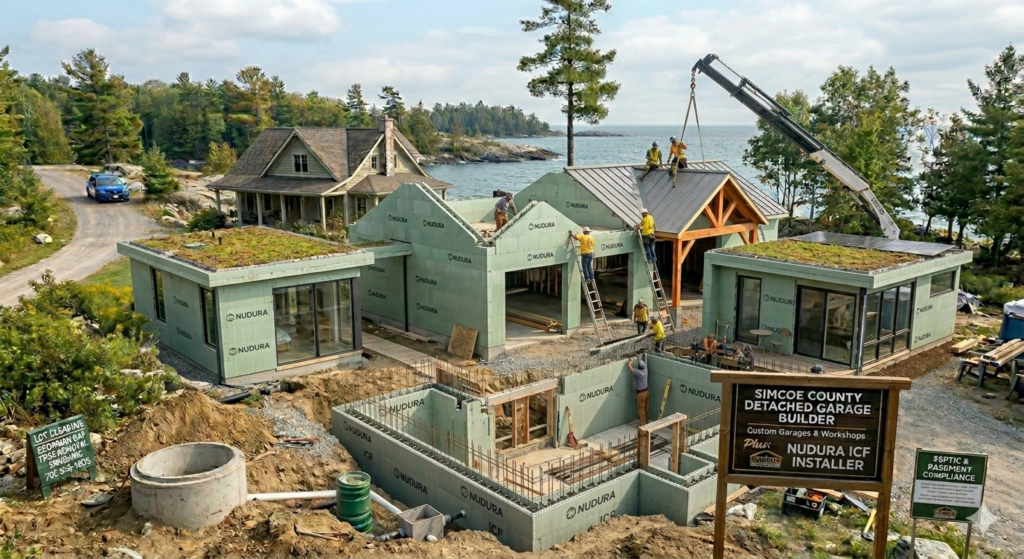
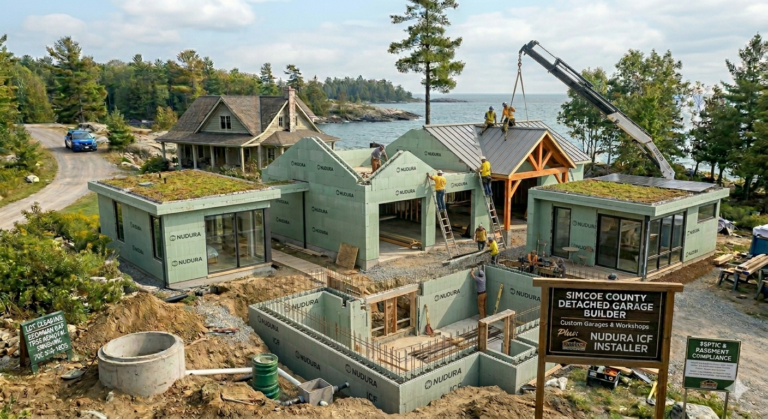
Detached Garages
Workshops & Shops
Radiant-Ready Builds
ICF Garage Builder Ontario: Stronger, Warmer Garages for Shops, Toys, and Year-Round Use
Not every garage in Ontario needs to be built with ICF. That is the honest answer, and it is also the useful one. If you want a simple cold-storage garage for parking the pickup, hiding Christmas decorations, and occasionally arguing with a lawn mower, a conventional build may do the job just fine.
But if you want a garage that feels more like a durable extension of the house, a serious workshop, a heated hobby space, or a structure that stays comfortable through Ontario winters, ICF starts making a lot more sense. It gives you a stronger wall assembly, better thermal performance, quieter interior conditions, and a building that does not act shocked every time February shows up.
This page is for property owners looking for an ICF garage builder in Ontario and trying to decide whether the extra investment is worth it, what kind of garage it makes sense for, and how ICF ties into slabs, radiant heat, and the rest of the build.
What makes ICF different
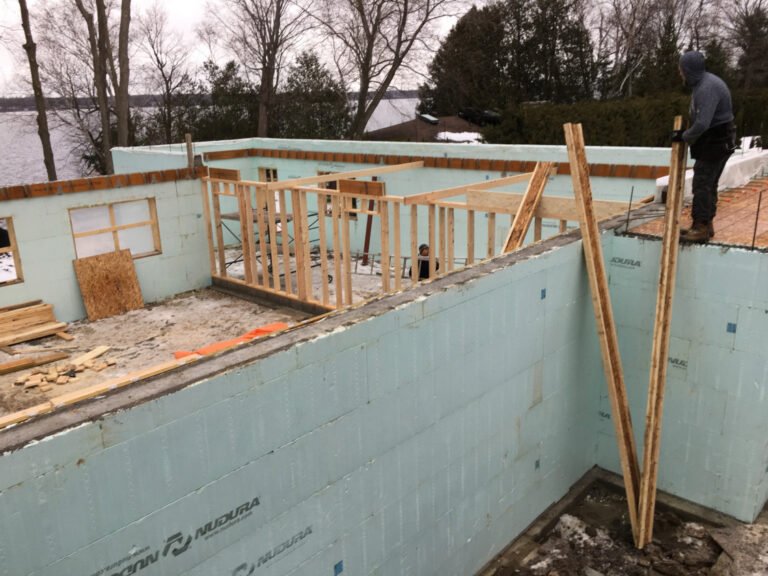
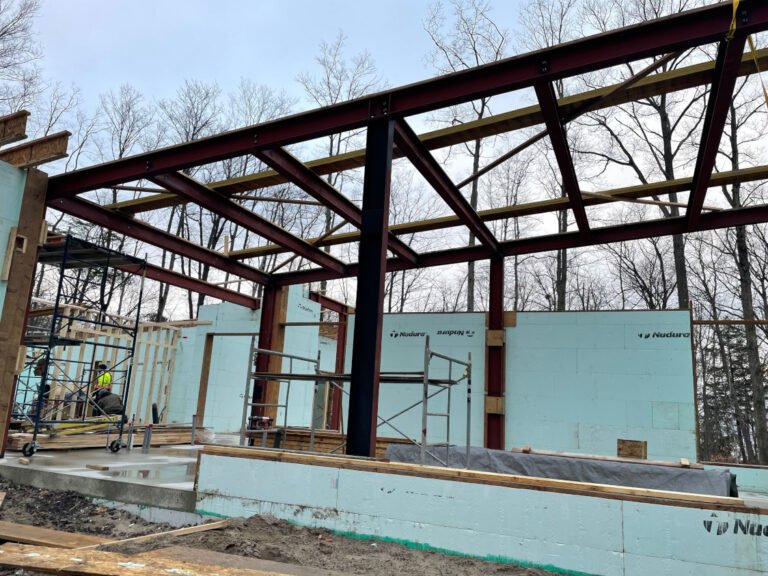
You are building a concrete wall wrapped in insulation, not just a framed wall trying its best to behave in a cold climate.
When it pays off
ICF shines when the garage is heated, used often, or expected to function like a true shop instead of a basic box.
What ties it together
Excavation, slab design, insulation, radiant heat, and mechanical planning all matter if you want the garage to actually work well.
Why some Ontario garages are worth building with ICF
The biggest mistake people make is assuming all garages have the same job. They do not. A cold storage garage and a year-round workshop are two different animals.
If you are building a garage where comfort, durability, and energy performance matter, ICF can be one of the smartest upgrades in the whole structure. The wall system gives you mass, insulation, and strength in one assembly. That makes a noticeable difference when the garage is heated, when tools and materials are stored inside, or when you spend real time out there working.
Ontario winters are not shy. Between wind, temperature swings, and freeze-thaw abuse, garages get tested harder than many people expect. A better wall system helps the building stay steadier, warmer, and less prone to the kind of temperature drama that makes workshops unpleasant and heated garages expensive to run.
- Better comfort: the interior temperature stays more stable when the garage is heated.
- More durability: concrete-and-foam wall systems are tough and resilient.
- Quieter interior: useful if the garage is beside the house, near neighbours, or used as a shop.
- Strong match for radiant: heated slabs and high-performance walls belong together.
- Better long-term value: especially when the garage is part of a serious lifestyle or work setup.
Builder truth: if you plan to spend ten months a year out in the garage but cheap out on the envelope, the building will remind you of that decision every single winter.
For some projects, the garage is basically a mini building of its own. It stores expensive vehicles, tools, gear, lifts, workbenches, or hobby equipment. In those cases, a better shell is not overkill. It is just good planning.
When ICF does make sense — and when it honestly might not
We like ICF, but we are not going to pretend it is the right answer for every garage. There are plenty of situations where conventional framing is fine. The real question is what you want the building to do.
| Garage Type | Does ICF Make Sense? | Why |
|---|---|---|
| Cold storage detached garage | Sometimes no | If it will never be heated and is used simply for storage or parking, conventional may be enough. |
| Heated garage | Often yes | ICF helps keep the space comfortable and reduces heat loss through the walls. |
| Workshop or hobby shop | Usually yes | Comfort, quiet, durability, and steady temperatures matter more in working spaces. |
| High-end detached garage | Often yes | If the garage is part of a premium property, ICF can be a strong fit for quality and longevity. |
If your main goal is simply to build the lowest-cost detached garage possible, then ICF may not be the first place to spend money. But if the garage is heated, used as a work area, or expected to perform like a long-term asset instead of a temporary shed with ambitions, the math changes quickly.
Why ICF and radiant heated slabs are such a good match
One of the best reasons to build an ICF garage is when you also want a heated slab. That combination works beautifully for Ontario garages, especially detached shops, hobby spaces, and high-use garages where you want dry floors, steady temperatures, and real comfort underfoot.
A radiant slab can make a garage feel civilized in the best possible way. You get even heat, warm floors, and a space that is far more pleasant to spend time in. But radiant works best when the rest of the building envelope supports it. If you install warm concrete and surround it with a weak shell, you are spending money heating your regrets.
That is why we often talk about the slab and walls together. A good ICF garage does not treat heating as an afterthought. It is planned as part of the building from the beginning, including insulation under and around the slab, tubing layout, future boiler or heat source decisions, and how the garage will actually be used.
For more on heated slabs, see Radiant Heated Garage Slab Ontario and Heated Garage Slab Cost Ontario. If the garage will need permit-ready mechanical planning, Mechanical Drawings Ontario can help tie the heating side together properly.
A warm slab under a properly insulated garage is one of those upgrades people enjoy every year. A warm slab under a mediocre shell is more like buying a winter coat and leaving the zipper open.
How ICF garage work ties into foundations, slabs, and site prep
Even detached garages that look simple from the driveway can have a lot going on underneath. The quality of the finished building depends heavily on what happens before the walls start.
That usually begins with excavation, grade, drainage, stone base, slab preparation, and the foundation approach. Some garages are slab-on-grade. Others involve frost walls, stepped footings, or more complex site conditions depending on the lot and elevation changes.
Foundation-first thinking
If your garage needs more than a simple slab approach, our ICF foundation contractor Ontario page explains how we handle foundation-based ICF work and where it fits best.
Garage projects can also connect closely to excavation, access, and grading work. On challenging sites, that groundwork matters every bit as much as the wall choice.
Site prep matters more than people think
If the property needs excavation, base prep, or site access work, review Excavation Services Georgian Bay. A well-built garage starts with stable, properly prepared ground — not with hope and a skid steer that had a free afternoon.
Garage success is rarely about one hero material. It is about a coordinated sequence. Excavate properly. Build the base properly. Plan the slab properly. Then the ICF walls, roof, doors, and heating system all have something solid to work with.
What owners usually want from an ICF garage in Ontario
1
A warmer building
Not necessarily tropical. Just not miserable. Most people want a garage that stays usable without huge temperature swings.
2
A stronger shell
ICF appeals to owners who want real durability, a premium feel, and a structure built for the long haul.
3
A better workshop
If you are spending time welding, woodworking, restoring cars, storing equipment, or simply escaping the house with dignity, comfort matters.
That is why many ICF garage enquiries are not really about parking at all. They are about building a shop, a heated hobby space, a durable outbuilding, or a premium garage that matches the quality of the house. If that is your situation, the conversation is much different than a lowest-bid garage package.
If you are still comparing garage routes more generally, see Detached Garage Builder Simcoe County for the broader garage-building perspective.
Permits, ventilation, and the “garage as real building” mindset
Once a garage moves beyond basic storage and becomes a heated, high-use structure, more planning usually follows. That includes permit requirements, slab details, heating decisions, and sometimes ventilation or mechanical design depending on the setup.
In Ontario, building permits are required before construction begins, and local municipalities enforce the Building Code. If the garage is detached, heated, larger, more complex, or intended for more than very simple storage, getting the permit and design side right early saves headaches later. :contentReference[oaicite:0]{index=0}
Where ventilation or mechanical design becomes part of the project, those details should be planned properly, not improvised halfway through the build. For projects that need mechanical coordination, visit HRV / ERV Design Ontario and Mechanical Drawings Ontario.
If you are looking at permit questions first, Detached Garage Permit Ontario is the practical place to start. The overall point is simple: once a garage becomes a real year-round building, it deserves real planning.
How we approach an ICF garage project
1
Review the use
Cold storage, heated parking, workshop, hobby shop, or premium detached garage. The intended use drives the build strategy.
2
Look at the site
Access, grades, drainage, excavation, frost strategy, slab approach, and utility planning all affect the scope.
3
Match the wall system
If ICF is the right fit, we align the garage design with the slab, openings, roof loads, and future mechanical needs.
4
Build it as a whole system
The best results come when the shell, slab, heating, and site work are treated like one coordinated project.
If you are mainly looking for pricing guidance, our ICF Garage Cost Ontario page is the logical next step. If you already know you want a brand-new ICF structure and need installation or supply support, go straight to ICF Installation and Supply.
FAQ: ICF garage builder Ontario
Is ICF worth it for a detached garage in Ontario?
It can be, especially when the garage is heated, used as a workshop, or expected to perform like a premium outbuilding. If it is only simple cold storage, conventional framing may be enough. The right choice depends on how you plan to use the building for the next decade, not just this year’s budget.
Do all garages need ICF walls?
No. That would be an easy sales pitch, but it would not be an honest one. Some garages are perfectly fine with conventional construction. ICF makes the most sense where comfort, thermal performance, durability, and year-round use are priorities.
Does ICF work well with heated slabs?
Yes. In fact, that is one of the best pairings for Ontario garages. A heated slab performs better when the surrounding building envelope is strong and well insulated. ICF walls help the space stay more stable and comfortable, which makes the slab investment more worthwhile.
Can an ICF garage be used as a workshop?
Absolutely. Workshops are one of the best use cases for ICF garages. The space tends to be quieter, more durable, and more comfortable to heat. That matters if you are spending real time there working, restoring vehicles, woodworking, or running equipment.
Do you handle just the ICF portion or the whole garage?
That depends on the project. Some clients need the ICF shell or foundation scope only. Others want a more complete garage build with coordination around site prep, slab, heating, and the overall structure. The scope is shaped around the job rather than forced into one box.
What information do you need for a quote?
Drawings are ideal, but even a rough sketch, dimensions, intended use, and project location can move the conversation forward. The more clearly the use of the garage is defined, the easier it is to say whether ICF is the right fit and how the build should be approached.
Will an ICF garage need a permit in Ontario?
Most new detached garage projects require permits before construction begins, with municipal review tied to Ontario’s Building Code and local enforcement. The exact permit requirements depend on the project and municipality, but this is not something to guess at casually. :contentReference[oaicite:1]{index=1}
Can mechanical or ventilation planning matter for a garage?
Yes, especially if the garage is heated, tightly built, or intended for regular occupancy-like use as a shop or work area. In those cases, mechanical design and ventilation planning should be part of the project early rather than left for later improvisation. NRCan publishes guidance on HRV and ERV systems for residential settings, which is useful background when these systems are considered. :contentReference[oaicite:2]{index=2}
If your garage is going to be more than a place to park, build it like it matters.
An ICF garage is not the cheapest way to build every garage in Ontario. But for heated garages, workshops, premium detached buildings, and structures you expect to use seriously year-round, it can be one of the smartest ways to build. The key is matching the shell, slab, and mechanical plan to the way you will actually use the building.