ICFPro.ca is a division of ICFhome Ontario - Direct Line 1 705 533-1633 - Email: info@icfpro.ca

Insulated Concrete Forms Ontario: Stronger, Quieter Walls (Without the Drafts)

Ontario Builds
ICF Basics
Strong • Quiet • Efficient
Insulated Concrete Forms in Ontario: What They Are, What They Cost, and When They’re Worth It
If you’re searching “insulated concrete forms Ontario,” you’re usually trying to answer one core question: Is ICF actually a smart move here—or just a shiny idea that sounds good on the internet? Ontario’s weather does a fantastic job stress-testing houses (freeze-thaw, wind-driven rain, humid summers), so the “right” wall system isn’t about hype—it’s about durability, comfort, and fewer future headaches.
APP Introduction
Agree • Promise • Preview
Agree: You don’t want to build a “good enough” house that becomes a drafty, noisy, maintenance-prone project by year five.
Promise: This guide explains ICF in plain English—how it’s built, what it does well in Ontario, and where it can bite you if the install is sloppy.
Preview: You’ll get a practical overview, the real tradeoffs (cost + sequencing), and a short checklist of what to ask an ICF installer/supplier.
E-E-A-T note: Written from a jobsite-first perspective—ICF is simple on paper, but the results come down to bracing, rebar, concrete, and details.
1) What Are Insulated Concrete Forms (ICFs), Really?
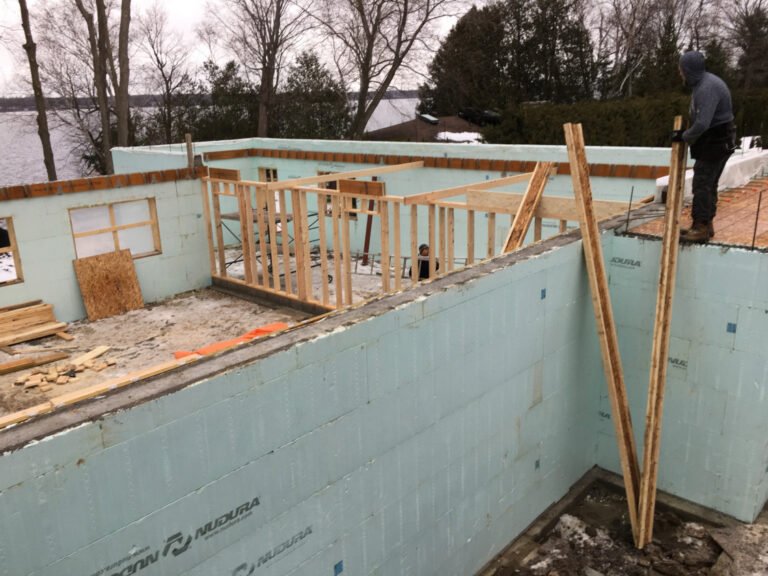
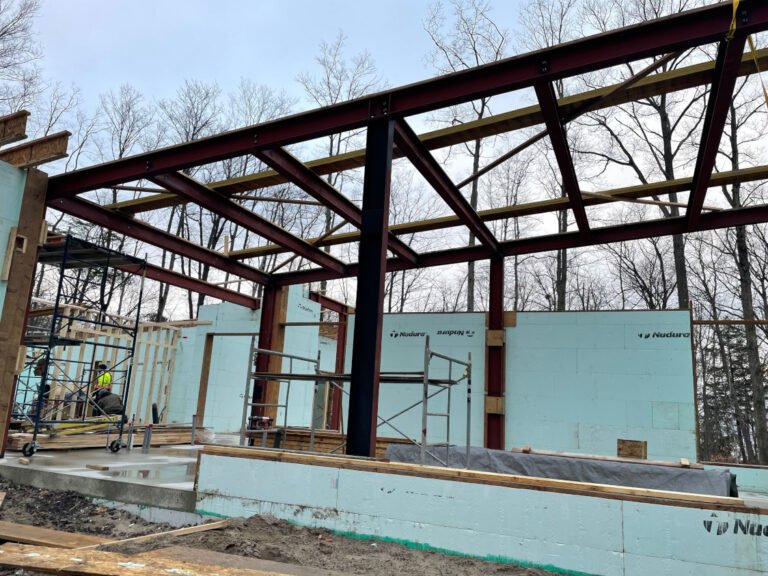
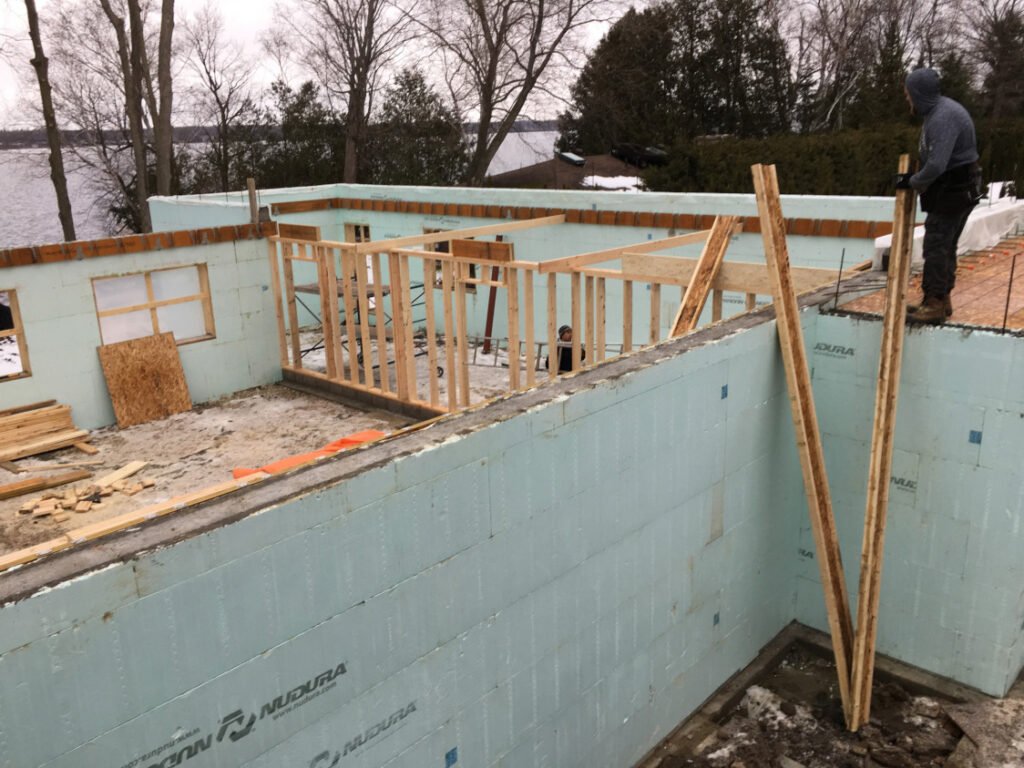
Think of ICF as “Lego for concrete walls”—except the Lego stays on forever and helps insulate the house. The forms are typically foam blocks or panels that stack into the shape of your exterior wall. Then the wall gets reinforced and filled with concrete.
The simple breakdown
- Forms: Interlocking foam units that create the wall shape.
- Rebar: Steel reinforcement placed inside to meet structural requirements.
- Concrete: Poured into the cavity—this becomes the structural wall.
- Continuous insulation: Foam remains in place on both sides of the concrete.
If you want the “full beginner” walkthrough (with visuals), start here:
Guide to Insulated Concrete Forms.
You’ll also see ICF explained in more general terms here: Insulated concrete forms overview. (Just remember: the real-world difference between “okay” and “amazing” ICF is the install details.)
2) Why ICF Makes Sense in Ontario (And Why Some People Walk Away)
Ontario isn’t one climate—it’s a rotating schedule of cold snaps, wet springs, humid summers, and windy shoulder seasons. That matters because most homeowner complaints (drafts, cold spots, moisture issues, noise) are really envelope problems.
Where ICF typically helps Ontario homeowners
Comfort: Less air leakage + thermal mass effects can make indoor temps feel steadier (fewer “hot/cold rooms”).
Quiet: Concrete + insulation is a strong combo for reducing exterior noise (traffic, wind, and “that one neighbor”).
Durability: Solid concrete structure doesn’t rot, warp, or become a buffet for pests.
Resilience: When detailed properly, the assembly can be very robust in wind-driven rain and harsh weather.
Why some people don’t choose ICF
- Upfront cost sensitivity: If the budget is tight, the premium can feel like a big bite (even if it pays off in comfort).
- Trade availability: Not every crew is truly experienced—ICF needs competence, not confidence.
- Design fit: If you’re doing a highly complex exterior with lots of steps/curves, it may raise labor and bracing complexity.
Want two credible, non-marketing reads on ICF performance and applications? See this CMHC overview: Reducing Costs of Affordable Housing: Insulated Concrete Form (CMHC), and this field performance report (hosted by RMCAO): Field Energy Performance of an Insulating Concrete Form Wall.
3) What ICF Costs in Ontario (Without Guessing Your Budget)
You’re right to be skeptical of “ICF costs X% more” claims. In real builds, the difference depends on design, crew efficiency, concrete pricing, bracing logistics, and how the overall house is engineered and detailed.
What usually drives the ICF premium
- Skilled labor: The crew needs to know bracing, alignment, consolidation, and pour sequencing.
- Bracing/scaffolding: You’re building a concrete wall—straightness matters.
- Concrete delivery and pumping: Scheduling and placement strategy matters more than people think.
- Openings and details: Windows/doors, bucks, lintels, ledgers—this is where “cheap” becomes expensive.
If you want a detailed breakdown (with the line items people forget), read:
ICF Cost Analysis.
If your project starts with an ICF foundation/basement, this guide helps you think through that portion specifically: ICF foundation cost in Ontario.
4) How to Choose ICF in Ontario Without Regret (The Builder Checklist)
Most “ICF horror stories” are not because ICF is bad—they’re because the job was treated like standard framing with foam blocks. It’s not. It’s a concrete structure wrapped in insulation. That means your questions to the supplier/installer should be specific.
The 8 questions that save you the most pain
- What bracing system are you using and how do you verify wall straightness before the pour?
- What’s your pour plan (lift height, slump targets, vibration, consolidation strategy)?
- Who supplies and sets bucks for windows/doors, and how are they fastened and sealed?
- How do you detail ledgers and attachments (decks, canopies, floors) so it stays airtight and durable?
- How do you waterproof below grade, protect it, and manage drainage? (This is not a “hope” category.)
- How do you coordinate MEP penetrations so you don’t end up Swiss-cheesing your air barrier?
- Who is the engineer and what does the rebar schedule look like for your wall heights and loads?
- What’s your fix process if something moves (because good crews have one—and bad crews pretend it can’t happen).
If you’re comparing brands and systems (availability, ties/webs, accessories), this guide helps: The Ultimate ICF Brand Comparison in Ontario.
If you want the “why ICF” benefits summary in plain language, here’s a helpful overview: Benefits of ICF over traditional homes.
Final Word (and a Real-World Anecdote)
Insulated concrete forms in Ontario can be a genuinely smart choice—especially if your priorities are comfort, quiet, and long-term durability. But the payoff isn’t automatic. It comes from planning the pour, detailing the envelope, and working with people who do ICF regularly (not “once, three summers ago”).
A homeowner we worked with initially priced ICF against premium framing and almost walked away—until we reviewed their design and noticed the real issue: a complex roofline and a pile of tricky transitions that would have been maintenance magnets no matter what the walls were. We simplified a few details, kept the envelope tight, and the result was a house that felt calm in every season—without the “why is this room always cold?” argument.