ICFPro.ca is a division of ICFhome Ontario - Direct Line 1 705 533-1633 - Email: info@icfpro.ca

Where to Get ICF House Plans

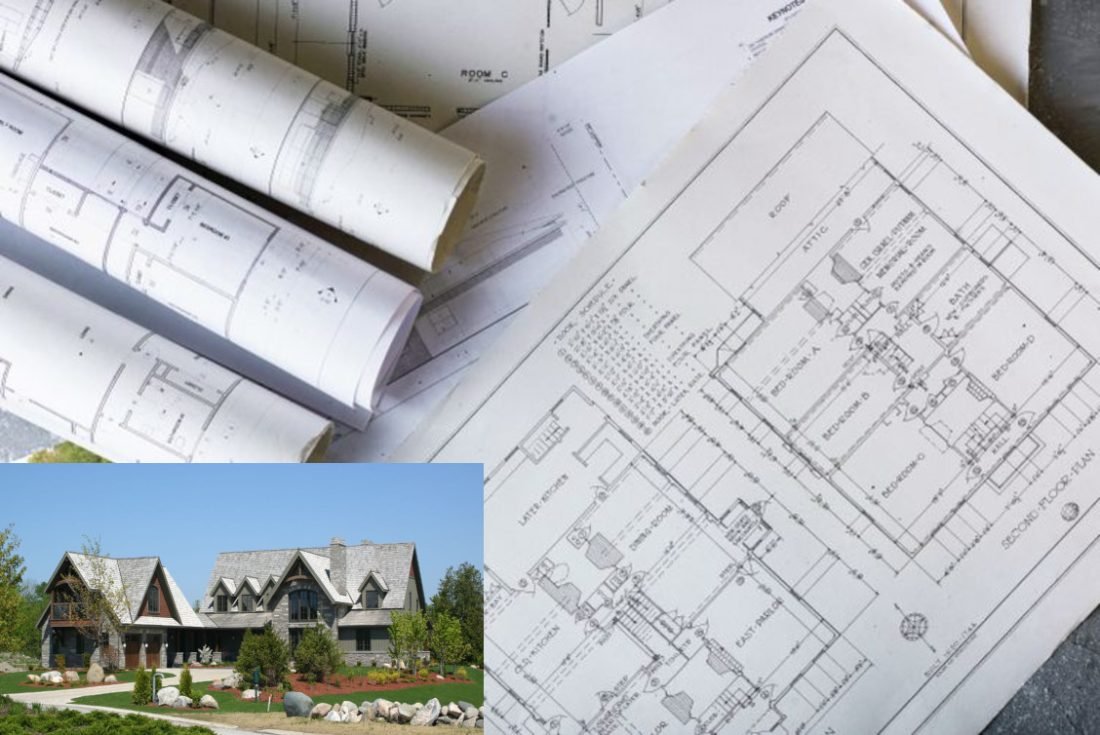
ICFpro.ca · ICF Design & Plans Sourcing
Where to Get ICF House Plans 2026: Ontario Builder’s Honest Guide
Looking for ICF (Insulated Concrete Form) house plans? This guide covers 10 verified plan providers, the critical Ontario adaptation reality that most plan-source articles skip entirely, and what to verify before spending money on any plan set. After 30 years pouring ICF in Ontario (since 1995, 300+ projects), here’s what works and what doesn’t when sourcing plans for an Ontario ICF build.
10 verified plan providers
Ontario adaptation reality
Real costs and constraints
2024 OBC compliance focus
ICF house plans in 30 seconds
Three real paths to ICF plans: (1) Pre-designed plan sets from specialist providers ($1,500-$4,500); (2) Custom design through an Ontario architect ($25K-$60K); (3) Design-build with an ICF specialist who handles design and construction together. Each fits a different scenario.
- Most "ICF plan sets" are US-sourced — they need Ontario adaptation for OBC compliance, climate zones, metric units, and snow loads. Budget $5,000-$15,000 for that adaptation work by an Ontario architect/engineer.
- Plan sets vs full construction drawings: Most online "plans" are conceptual sets requiring additional engineering for permits. True construction-ready plans cost more but include structural engineering, HVAC sizing, and code compliance.
- The hybrid approach often works best: use online plan libraries for inspiration and floor plan ideas, then have an Ontario design-build firm produce the actual construction drawings sized for OBC, climate zone, and your specific lot.
- What to verify before buying any plan: Foundation design suitable for your lot, structural design for local snow/wind loads, MEP compatibility, and whether the plan is conceptual or construction-ready.
10
Plan providers verified active 2026
$1.5-4.5K
Pre-designed plan typical cost range
$5-15K
Ontario adaptation cost for US-source plans
$25-60K
Full custom design by an Ontario architect
The 3 Paths to ICF House Plans
Before sourcing plans, decide which path fits your situation. Each has different costs, timelines, and outcomes:
| Path | Typical cost | Timeline | Best for |
|---|---|---|---|
| 1. Pre-designed plan set | $1,500-$4,500 plan + $5K-$15K Ontario adaptation | 4-8 weeks | Tight budget, standard architectural style, willing to adapt a US-source design. |
| 2. Custom architectural design | $25K-$60K (3-7% of construction cost typical) | 4-8 months | Premium custom homes, unique site conditions, specific architectural vision, $1M+ projects. |
| 3. Design-build with ICF specialist | $15K-$35K design (often credited toward construction) | 3-6 months | Want one team handling design and construction, ICF integration from the start, single-source accountability. |
What Makes a Good ICF Plan
Before evaluating providers, understand what genuinely differentiates an "ICF plan" from a generic house plan retrofitted for ICF:
Structural design integrated for ICF
Real ICF plans specify reinforced concrete wall design per CSA A23.3 (Canadian) or ACI 318 (American), with rebar sizing, spacing, and lap splice details. They account for ICF wall thickness in floor plan dimensions (typically 12-14″ total wall thickness vs 6-8″ for wood frame). Generic plans retrofitted for ICF often have layout problems because the dimensional differences weren’t designed in from the start.
Window and door opening dimensions
ICF openings need to be sized at the pour stage with proper lintels (load-bearing beams above openings). Changes after pour are expensive ($1,500-$4,000 per opening for concrete saw work). Good ICF plans specify exact opening dimensions, lintel design per CSA A23.3, and required reinforcement.
Service penetration coordination
Electrical, plumbing, and HVAC penetrations through ICF walls should be planned at the pour stage to avoid post-pour coring ($300-$800 per core). Good ICF plans mark all penetrations on construction drawings; generic plans don’t.
HVAC sizing for ICF performance
ICF homes have significantly lower heating loads than wood frame — potentially 30-40% lower. HVAC equipment specified on a generic plan will be oversized for an ICF home, leading to short cycling, comfort issues, and unnecessary cost. Plans designed for ICF specify smaller equipment matched to lower loads.
Climate and code compliance
Ontario plans need to address: OBC SB-1 climate zone (5, 6, or 7) with appropriate snow loads (1.3-3.5+ kPa) and frost depths (1.2-1.8m). OBC SB-12 energy requirements. CSA F280-12 heat loss calculations for HVAC sizing. MVDS at permit per 2024 OBC. Radon rough-in mandatory. Most US-source plans address none of these directly — they assume US IBC and IECC codes which don’t apply in Ontario.
Honest performance specifications
Real ICF performance numbers: R-22 to R-25 effective wall insulation, STC 50-55 sound rating with 8″ concrete core, 1.0-1.26 ACH50 airtightness, 4-hour ASTM E119 fire rating, 25-40% heating energy reduction vs comparable wood frame. Plans claiming "R-50 walls" or "100% energy savings" or "5x stronger" are marketing fluff, not technical specifications.
10 Verified ICF Plan Providers
Plan providers active as of 2026, organized by relevance for Ontario builds. Each includes notes on Ontario buildability:
1
eDesigns Plans
Canadian · ONICF specialty
Ontario-based plan provider specializing in ICF house plans designed for Canadian code compliance. The most directly Ontario-applicable option on this list. Plans designed with metric units, Canadian rebar specifications (CSA G30.18), and OBC compliance considerations.
edesignsplans.ca/icf-house-plansOntario buildability: Best fit for Ontario builds. Plans designed with Canadian code in mind. Still verify climate zone-specific snow loads and frost depth for your specific lot, and confirm HVAC sizing per CSA F280-12.
2
NUDURA Project Applications
Canadian-manufacturedBrand resource
NUDURA is the largest ICF brand in Ontario, manufactured in Canada. Their site features residential project applications and reference designs that can serve as inspiration. NUDURA’s technical team supports installers and architects with custom design assistance.
nudura.comOntario buildability: Project gallery for inspiration rather than purchasable plans. The technical resources are valuable for understanding what NUDURA blocks enable. Combine with an Ontario architect for actual construction drawings.
3
The Southern Designer
US/Canadian designersICF available
Plan library featuring designs from professional US and Canadian designers, with some ICF-optimized plans available. Mix of architectural styles from traditional to contemporary.
southerndesigner.comOntario buildability: Canadian designer plans need less adaptation than US-only sources. Always verify the specific designer’s familiarity with Canadian climate zones and OBC requirements before purchase.
4
The House Designers
US-basedLarge catalog
Large US-based plan marketplace with a dedicated ICF house plans section. Designs spanning 1,000 to 5,000+ sq ft across various architectural styles. Their concrete-floor-plan specialists can assist with modifications.
thehousedesigners.com/ICF-house-plansOntario buildability: US-source plans designed primarily for US IBC code and IECC climate zones. Budget $5,000-$15,000 for Ontario architect/engineer adaptation including OBC compliance review, metric conversion, snow load verification, and HVAC resizing per CSA F280-12.
5
Plan Collection
US-basedMulti-style
US plan catalog including ICF and concrete block plans. Selection ranges from modern one-story homes through Craftsman, Mediterranean, and contemporary architectural styles. Plans typically come as conceptual sets requiring additional engineering.
plancollection.comOntario buildability: Standard US-source plans. Substantial Ontario adaptation required. Confirm whether plans you’re considering are conceptual (will need engineering) or construction-ready (full structural design). Conceptual sets at $1,500-$2,500; construction sets typically $3,000-$5,000.
6
Archival Designs
US-basedModern styles
US plan firm focused on contemporary architectural styles including modern farmhouse, barndominium, and LEED-aligned designs. Some ICF-compatible plans available; barndominium designs in particular work well with ICF construction.
archivaldesigns.comOntario buildability: US source requiring full Ontario adaptation. Barndominium designs in particular need careful review for Ontario zoning compliance — this housing type isn’t universally permitted in Ontario municipalities and may face zoning resistance.
7
DFD House Plans
US-basedLuxury
US plan firm specializing in luxury and European-style architectural designs with open floor plans. Some plans are ICF-compatible or can be modified to ICF construction.
dfdhouseplans.comOntario buildability: US-source luxury plans almost always require substantial Ontario adaptation. For premium custom homes ($1M+), custom architectural design through an Ontario architect typically delivers better value than adapting a US plan.
8
EPLAN.HOUSE
InternationalLarge catalog
International plan library with ICF-compatible designs across multiple regional standards. Large catalog with searchable filters for size, style, and features.
eplan.houseOntario buildability: International standards vary significantly. Verify the specific origin standard of any plan before purchase. European-source plans typically use different structural standards (Eurocode) and energy requirements than Canadian OBC; adaptation cost can match or exceed plan cost.
9
Dream Green Homes
US-basedEclectic
Specialty plan provider focused on green building, including ICF designs alongside earthbag, strawbale, and other alternative construction methods. Appeals to environmentally-conscious owner-builders.
dreamgreenhomes.comOntario buildability: Alternative construction methods (earthbag, strawbale) face significant Ontario code resistance and may not be permitted by municipal building departments. Stick with their ICF-only designs for Ontario projects.
10
ICF Southern (UK)
UK-basedSelf-build focus
UK-based provider specializing in NUDURA ICF system plans for self-builders. Provides architect/engineer references for adaptation work in the UK market.
icfsouthern.co.ukOntario buildability: UK plans use Eurocode structural standards, UK climate zones, and UK building regulations — fundamentally different from Ontario OBC. Generally not recommended for Ontario projects unless the architectural concept is compelling enough to justify essentially redrawing the plans for Canadian compliance.
The Ontario Adaptation Reality
Here’s what most "ICF house plans" articles skip entirely: a US-source plan set isn’t buildable in Ontario without significant adaptation work. The honest 2026 picture:
| What needs to change | Why | Typical cost |
|---|---|---|
| Structural review per CSA A23.3 | US plans designed per ACI 318. Reinforcement specifications differ. Lap splice requirements differ. Cover requirements differ. | $1,500-$3,500 |
| Snow load verification | OBC SB-1 snow loads (1.3-3.5+ kPa Ontario) often higher than US sources. Roof structural design may need upsizing. | $800-$2,000 |
| Frost depth and foundation | US foundation designs typically assume 0.6-1.0m frost depth. Ontario requires 1.2-1.8m. Foundation depth, footing size, and excavation all change. | $500-$1,500 |
| Energy code compliance (SB-12) | Ontario’s 2024 SB-12 requirements may differ from US IECC. Window U-values, envelope requirements, HVAC efficiency may need spec changes. | $1,200-$3,000 |
| HVAC sizing per CSA F280-12 | Required heat loss calculation for Ontario permits. Equipment sizing must be redone for ICF loads + Ontario climate zone. Smaller equipment typically results. | $800-$2,000 |
| MVDS for 2024 OBC permit | Mechanical Ventilation Design Summary required at permit stage. Includes HRV/ERV sizing, ducting design, air balance calculations. | $600-$1,500 |
| Radon rough-in design | 2024 OBC requires passive sub-slab depressurization piping in all new foundations. Plans must show this. | $200-$500 |
| Metric unit conversion | Imperial dimensions on plans need conversion to metric for Ontario building department review (or careful dual-dimension annotation). | $400-$1,000 |
Total typical Ontario adaptation cost: $5,000-$15,000 on top of the original plan set price. Combined with a $2,500-$4,500 US plan, you’re looking at $7,500-$19,500 to get a US-source plan Ontario-buildable. Compare to the cost of a custom Ontario architectural design ($25,000-$60,000) for premium projects, or design-build with an ICF specialist ($15K-$35K, often credited toward construction).
The math nobody talks about (but everyone should)
US plan ($3,000) + Ontario adaptation ($10,000) = $13,000 total with a design you didn’t originate and an architect who’s adapting someone else’s work. For $15K-$25K all-in with an Ontario design-build firm, you get a design originated specifically for your lot, your climate zone, your code requirements — and often integration with construction. For premium projects ($800K+ construction cost), full custom architectural design ($30K-$60K) becomes proportional. The economics of adapting US plans only work for entry-tier projects where the design is intentionally generic.
What to Verify Before Buying Any Plan
Whether buying a $1,500 plan set or commissioning $50K of custom design, verify these items before signing:
1. Is this conceptual or construction-ready?
Conceptual plans show floor plan, elevations, basic dimensions. They’re used for visualization and rough cost estimation. Construction-ready plans include structural engineering, foundation design, MEP layouts, dimensioned details for framing/concrete pour, schedules for windows/doors/finishes. Most online "plan sets" are conceptual; you’ll need engineering on top.
2. Whose seal will be on the final stamped drawings?
Ontario building permits require drawings stamped by a licensed Ontario architect or professional engineer (depending on project size and Part 9 vs Part 3 OBC classification). Plans purchased online aren’t stamped. You’ll need an Ontario-licensed professional to review and stamp the adapted drawings before permit submission.
3. What modifications are permitted?
Most plan licenses allow modifications but specify limits. Some prohibit redistribution. Some require additional payment for substantial modifications. Read the license terms carefully before assuming you can freely modify the plan for your needs.
4. Are HVAC and structural specs included?
Conceptual plans typically don’t include detailed HVAC sizing or structural engineering. These must be done by Ontario professionals for your specific climate zone, lot, and building department. Budget accordingly.
5. Is the design buildable on your specific lot?
Lot dimensions, setbacks, easements, grading, services, and zoning all constrain what can be built. A beautiful plan may not fit your specific lot. Verify lot compatibility before purchasing any plan: sketch the home footprint on your lot survey to confirm setback compliance.
6. Does the design account for your climate zone?
Plans designed for Texas or Florida won’t have the envelope performance, snow load capacity, or frost depth design appropriate for Ontario. Check the original design jurisdiction and assume Ontario adaptation will be needed if it’s not Canadian or specifically designed for cold climate.
Customization and Modifications
Most homeowners want to modify a plan to fit their preferences and lot. Common modifications and their typical costs:
| Modification | Typical cost | Complexity |
|---|---|---|
| Window/door size or position changes | $300-$800 per opening | Low — usually a drawing update |
| Interior wall layout adjustments | $500-$2,000 | Low to medium — non-load-bearing changes simple |
| Adding rooms or square footage | $2,000-$8,000 | Medium — structural review required |
| Mirror plan (flip layout) | $300-$1,000 | Low — standard plan service |
| Roof line / pitch changes | $1,500-$5,000 | Medium-high — structural engineering update |
| Converting wood frame plan to ICF | $5,000-$12,000 | High — structural redesign, dimension adjustment |
| Foundation type change (slab/basement/walkout) | $2,500-$7,500 | High — foundation engineering, drainage, services |
| HVAC system change (forced air to radiant, etc) | $1,500-$4,000 | Medium — mechanical redesign, code compliance |
Modifications add up quickly. If you need 3-4 substantial modifications to a $3,000 plan, you may end up at $10K-$20K in plan costs before construction starts. At that point, custom design ($25K-$60K) becomes competitive on price, and you get a design originated for your specific needs rather than retrofitted.
Practical Tips from 30 Years on the Ground
After 30 years building ICF in Ontario, here are practical observations that don’t make it into typical plan-source articles:
1. Prioritize simple, rectangular layouts
ICF works best with straight walls and standard 90° corners. Each curve, complex angle, or specialty geometry adds cost ($1,500-$4,500 per feature). Open floor plans with rectangular footprints are the most cost-effective ICF designs. Reserve curves and complex shapes for areas where they add genuine architectural value, not just visual interest.
2. Design for the pour, not just the floor plan
Window/door positions, electrical penetrations, plumbing rough-ins, and HVAC duct routing should all be planned and marked on construction drawings before the concrete pour. Changes after pour are expensive. Good ICF plans show all penetrations; generic plans don’t.
3. Consider future expansion possibilities
Adding to an ICF home is harder than adding to a wood frame home (concrete saw work, structural integration). If you might add a garage, sunroom, or wing later, design the original home with future expansion in mind — structural provisions, services planning, foundation continuity.
4. Plan window/door schedules carefully
Replacement windows and doors in ICF require correctly-sized openings. Standard sizing (per manufacturer catalogs) is easier to maintain over the home’s service life than custom dimensions. Specify standard sizes when possible.
5. Verify radiant floor heating compatibility
ICF homes pair well with radiant floor heating because the airtight envelope retains the gentle radiant heat efficiently. If radiant is in your plan, verify the slab thickness (typically 100-150mm for radiant), insulation underneath, and manifold locations are all designed in. Adding radiant later costs significantly more than designing it in.
6. Plan for HRV/ERV ventilation properly
The 2024 OBC requires HRV (heat recovery ventilator) or ERV (energy recovery ventilator) in all new homes. ICF airtight envelopes make proper ventilation more critical. HRV/ERV ducting routing should be in the plan, not added during construction.
7. Get permit-stage engineering done early
Structural engineering, MVDS, heat loss calculations, and other permit requirements typically take 4-8 weeks if started after plans are complete. Starting them in parallel with plan finalization saves project time. Permit-stage soft costs total $20K-$60K on most Ontario custom builds — budget appropriately.
The Hybrid Approach We Usually Recommend
For most Ontario ICF builds, the path that delivers the best result and cost is a hybrid:
- Use online plan libraries for inspiration. Browse hundreds of designs to identify floor plans, elevations, and architectural styles you like. Save references.
- Don’t buy the US plan set. Use it as a reference, not a starting point. The adaptation cost typically exceeds savings vs custom design.
- Engage an Ontario design-build firm or architect for the actual design work, using your saved references as briefing material. They’ll design for your lot, climate zone, and code from the start.
- Get permit-stage engineering done early — structural, MVDS, heat loss — in parallel with design finalization.
- Coordinate with your ICF contractor during design. Many design choices that look harmless on paper have significant cost or buildability implications in ICF. Early coordination prevents expensive surprises.
This approach typically costs $15K-$35K all-in for design work (often partially credited toward construction in design-build arrangements), delivers a home designed specifically for your situation, and avoids the adaptation costs and risks of US-source plans.
Related ICFpro deep dives
More references on ICF design, construction, and Ontario-specific considerations.
★ Service
ICF Custom Home Building Service →
★ DesignICF Design Challenges Honest →
★ CodeICF & the 2024 Ontario Building Code →
CostICF Cost Per Sq Ft Ontario 2026 →
DecisionIs ICF Worth It in 2026? →
HomeownerWhat is ICF Construction? Homeowner Guide →
ProcessHow ICF Construction Works →
Benefits10 Benefits of ICF Construction →
ReferenceICF Blocks: All Types & Variants →
ReferenceICF Wall Systems Reference →
SystemComplete ICF Building Primer →
BrandAll 8 Ontario ICF Brands Compared →
ProcessICF Installation Methodology →
FoundationICF Foundation Complete Guide →
DIYICF for Owner-Builders Ontario →
LocalCustom Home Builders Barrie →
LocalICF Homes Simcoe County →
FAQ25 ICF Questions Answered →
Need ICF House Plans for Ontario? Skip the Adaptation Costs.
If you’re building in Simcoe County, Georgian Bay, or surrounding Ontario regions, we can design your home from the start with Ontario climate zones, 2024 OBC compliance, and ICF construction integrated — bypassing the $5K-$15K adaptation costs of US-source plans. 30 years pouring ICF since 1995. 300+ projects. Three credentials. 7-year warranty. Send us your inspiration references; we’ll show you what’s buildable and at what cost.
FAQ: Where to Get ICF House Plans
How much do ICF house plans cost?
Pre-designed plan sets: $1,500-$4,500 from US providers; less from Canadian sources. Construction-ready plans with full engineering: $3,000-$8,000. Custom architectural design: $25,000-$60,000 (3-7% of construction cost typical). Design-build with ICF specialist: $15,000-$35,000 often credited toward construction. Add $5,000-$15,000 for Ontario adaptation of any US-source plan.
Can I use US ICF house plans in Ontario?
Not directly — they need adaptation. US plans use ACI 318 structural standards (not CSA A23.3), US IBC code (not OBC), IECC climate zones (not OBC SB-1), imperial units, and US-specific HVAC sizing. Ontario adaptation typically costs $5,000-$15,000 covering structural review, snow load verification, frost depth, energy compliance, HVAC sizing per CSA F280-12, MVDS for permit, radon rough-in, and metric conversion.
What’s the difference between conceptual and construction-ready plans?
Conceptual plans show floor plans, elevations, and basic dimensions for visualization and rough estimating. They’re NOT sufficient for Ontario building permits. Construction-ready plans include structural engineering, foundation design, MEP layouts, dimensioned construction details, and schedules. Most online "ICF plan sets" are conceptual; you’ll need additional engineering before permit submission.
Do I need an architect for an ICF home in Ontario?
Depends on size and OBC classification. Part 9 houses (under 600 sq m, 3 stories, single dwelling) can be designed by a qualified BCIN-registered designer in Ontario. Part 3 buildings (over 600 sq m or 3+ stories or multi-unit) require a licensed architect or engineer. Most custom homes fall in Part 9. The drawings must be stamped by an Ontario-licensed professional before permit submission regardless of who drew them.
What’s the best Canadian source for ICF house plans?
eDesigns Plans (edesignsplans.ca) is the most directly Ontario-applicable source on this list — Canadian-based, designed with Canadian code considerations. NUDURA (manufactured in Canada) provides project applications and reference designs. The Southern Designer includes some Canadian designers. For premium projects, custom design through an Ontario architect or design-build firm typically delivers better value than adapting any pre-designed plan.
What should I look for in an ICF plan?
(1) Structural design per CSA A23.3 with proper rebar specifications. (2) Dimensions accounting for 12-14" ICF wall thickness. (3) Window and door schedule with lintel design. (4) Service penetration locations marked for pour-stage installation. (5) HVAC sized for ICF lower heating loads per CSA F280-12. (6) OBC SB-1 climate zone compliance for snow, wind, frost. (7) 2024 OBC SB-12 energy compliance. (8) MVDS and radon rough-in incorporated.
Can I modify a plan I purchase?
Most plan licenses permit modifications but with conditions. Read the license terms carefully. Common modifications and typical costs: Window/door changes $300-$800 per opening, interior layout changes $500-$2,000, roof line changes $1,500-$5,000, foundation type change $2,500-$7,500, converting wood frame plan to ICF $5,000-$12,000. Substantial modifications can exceed original plan cost; at that point custom design becomes competitive.
How long does it take to get ICF plans permit-ready?
Pre-designed plan with adaptation: 4-8 weeks for adaptation work plus 6-12 weeks for Ontario permit review = 10-20 weeks total. Custom architectural design: 4-8 months for design plus 6-12 weeks permit review = 6-12 months total. Design-build: 3-6 months for design and engineering, parallel permit processing reduces total elapsed time.
What permits do I need to build an ICF home in Ontario?
Required permits typically include: Building permit from the municipality (includes structural drawings, MVDS at permit per 2024 OBC, HVAC sized per CSA F280-12, radon rough-in design, energy compliance per SB-12). Septic permit if outside municipal services (issued by health unit). Well permit if no municipal water. Driveway permit from municipality or MTO. Permit review timeline: typically 6-12 weeks in Ontario.
What is BCIN and do I need it?
BCIN (Building Code Identification Number) is required for any person designing buildings in Ontario under the OBC. Most Part 9 house designs (single-family residential under 600 sq m) require a BCIN-registered designer. Architects and engineers have their own licensing and can also design. You don’t need BCIN as the homeowner, but the drawings submitted for your permit must be stamped by a BCIN-registered designer, architect, or engineer.
More From the ICFPro Library